Case study
Cropilot
A bridge between NASA and farmers
- From idea to working bot
- 2 days
- NASA climate variables
- 8
- Open source
- 100%
The challenge
NASA publishes decades of open Earth observation data that could guide what and when to plant, but it is locked behind APIs and scientific units. The farmers who would benefit most are rarely tech-savvy and will not open a dashboard.
The solution
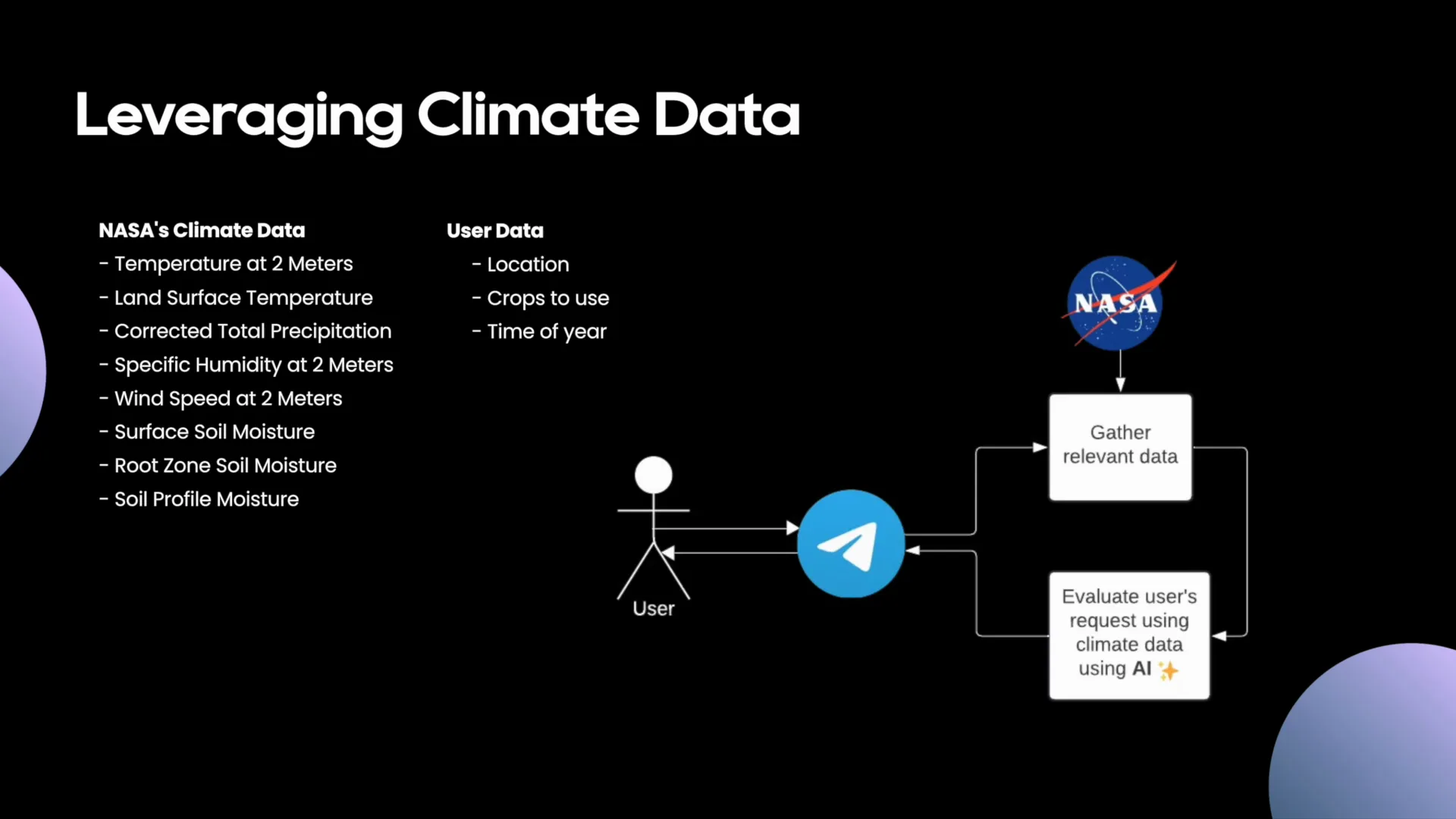
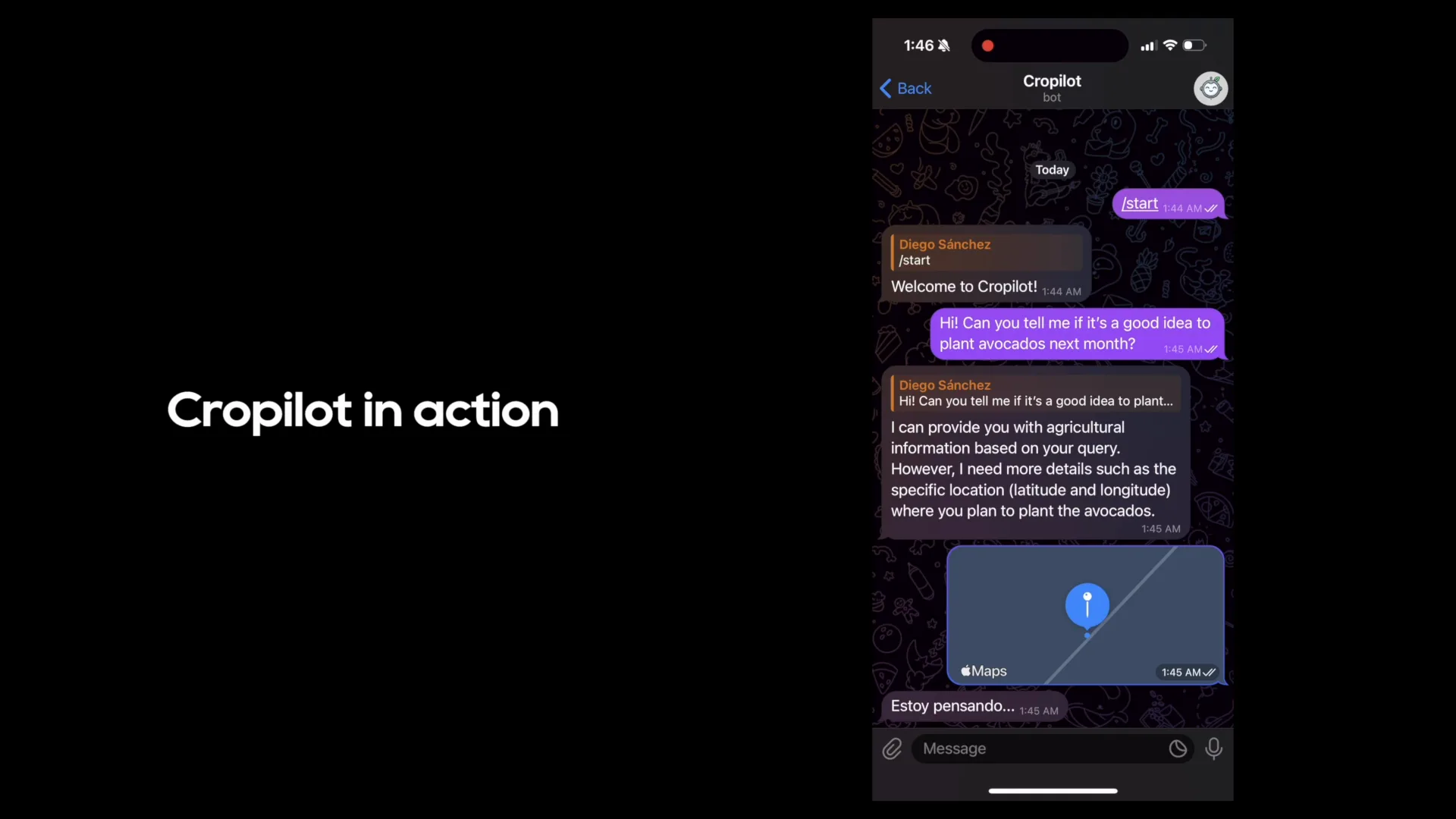
Cropilot is a RAG agent that lives in Telegram. A farmer shares their location, crop and time of year; Cropilot pulls the matching climate history from NASA's POWER API, compares it with the optimal conditions for each growth stage of the crop, and replies in plain language with whether to plant and what to adjust.
Key features
Chat-first: works inside Telegram, no new app to learn
Localized NASA climate data since 2000: temperature, precipitation, humidity, wind and soil moisture
Stage-by-stage analysis (sowing, tuber initiation, bulking, maturation) against optimal ranges
Plain-language recommendations generated with LangChain LLM chains
Multi-language replies with i18next
Use-case architecture that can extend to WhatsApp or Messenger
Technical challenges
Shipping a working product in a 2-day hackathon, our first one
Turning raw climate series into a context an LLM can reason over reliably
Defining optimal conditions per crop and growth stage
Making AI output understandable for non-technical users on a phone
Development process
I built Cropilot with Diego Sánchez and Luis Alejandro Martínez Maldonado for the 2024 NASA International Space Apps Challenge in Buenos Aires, under the challenge "Leveraging Earth Observation Data for Informed Agricultural Decision-Making". It was our first hackathon: in two days we went from idea to a working Telegram bot, with a TypeScript backend split into LLM, messaging and NASA modules.
Impact and results
Cropilot showed that open satellite data can reach farmers through the apps they already use. The project is open source, so anyone can adapt it to new crops, regions or messaging platforms.
“We want to make the vast amounts of data from our planet reachable by anyone and help them consume it in an easy-to-understand fashion, while allowing them to make informed decisions.”
Gallery
Next project
OPear